
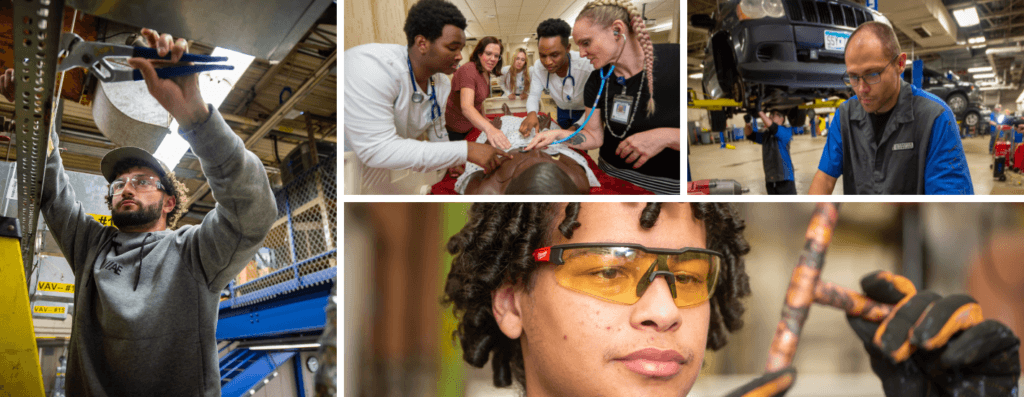
Explore careers. Build skills. Prepare for what’s next.
Career and Technical Education (CTE) combines academic learning with technical skill development to prepare students for high-demand careers. CTE programs help students explore career interests, gain workplace experience, and develop the professional skills employers value.
Students have opportunities to:
- Explore a variety of career pathways and industries
- Apply classroom learning to real-world situations
- Develop technical and employability skills
- Earn industry-recognized certifications and credentials
- Participate in internships, job shadowing, and work-based learning experiences
- Prepare for postsecondary education and career advancement
Why Choose CTE?
CTE helps students discover their interests, gain confidence, and make informed decisions about their future. Students graduate with valuable skills and experiences that prepare them for a variety of education and career pathways.
Benefits of CTE
Career Exploration Students discover interests and talents while learning about career opportunities in growing industries.
Hands-On Learning CTE emphasizes experiential learning through labs, simulations, projects, and workplace experiences.
Industry Connections Programs are designed in collaboration with business and industry partners to ensure students learn relevant and in-demand skills.
College and Career Readiness Students graduate prepared for multiple pathways, including employment, apprenticeships, technical education, and four-year degree programs.
Workforce Skills Communication, teamwork, problem-solving, leadership, and professionalism are integrated into every program.
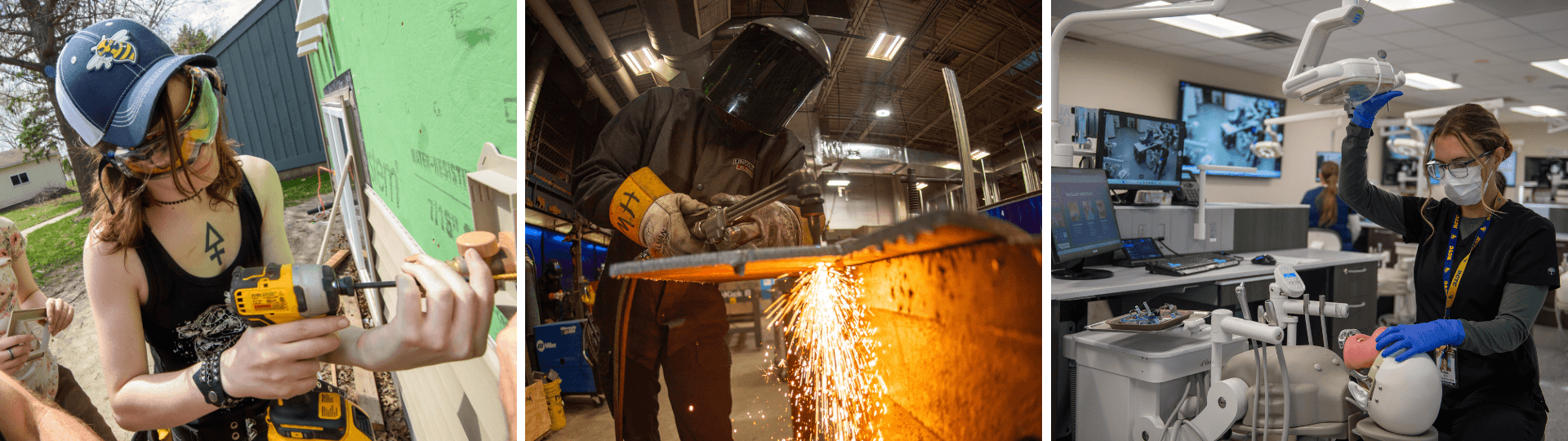
Career Pathways
CTE programs offer opportunities across a wide range of career fields, including:
- Advanced Manufacturing
- Agriculture
- Construction
- Digital Technology
- Education
Each pathway provides students with a structured sequence of learning experiences that lead to career and postsecondary opportunities.
Learning Beyond the Classroom
Strong partnerships with employers, community organizations, and colleges help bring learning to life. Students may have opportunities to participate in:
- Job shadowing
- Industry mentoring
- Internships
- Apprenticeships
- Clinical experiences
- Dual-credit and concurrent enrollment program
These experiences help students build confidence, develop workplace skills, and explore careers before making long-term education decisions.
Myth vs. Reality: Understanding CTE
Despite its growth and success, misconceptions about Career and Technical Education still exist.
Myth: CTE is only for students who are not going to college.
Reality: CTE prepares students for both college and careers. Many students continue on to certificate, associate, bachelor’s, and advanced degree programs.
Myth: CTE is only about skilled trades.
Reality: CTE includes pathways in healthcare, business, technology, engineering, education, manufacturing, public safety, and many other fields.
Myth: CTE courses are easier than traditional academic courses.
Reality: CTE combines rigorous academics with real-world application, critical thinking, communication, and technical skill development.
Myth: CTE limits career options.
Reality: CTE expands opportunities by helping students explore interests and gain transferable skills that apply across many careers.
Myth: Students must choose a career too early.
Reality: CTE is designed to help students explore options and discover what interests them before making long-term decisions.
Myth: CTE is only valuable for getting a job after high school.
Reality: CTE supports lifelong learning and provides skills that benefit students throughout college, careers, and beyond.
Myth: CTE only teaches technical skills.
Reality: CTE also develops leadership, teamwork, communication, professionalism, and problem-solving skills.
Myth: Hands-on learning isn’t important in today’s workforce.
Reality: Employers value experience and practical skills. CTE gives students opportunities to apply what they learn in authentic workplace settings.
The Truth About CTE
Career and Technical Education is a high-quality educational pathway that prepares students for success in college, careers, and life. By combining rigorous academics, technical training, work-based learning, and career exploration, CTE empowers students to achieve their goals and meet the needs of a rapidly changing workforce.
CTE isn’t a backup plan. It’s a pathway to opportunity, purpose, and success.